Saturday Night Log: 287 Calls, 91 Unanswered (and €2,730 Gone)
91 unanswered calls in one evening, €2,730 in lost revenue. Anatomy of a Paris Saturday night and a 5-minute method to calculate your own phone leakage.

6pm, Saturday. First sitting. The phone starts ringing at the host stand and the floor manager is already three tables deep.
Four rings. Voicemail.
By 11pm that Parisian restaurant will have taken 287 calls and left 91 of them ringing. Nobody on that team did anything wrong. I spend my Saturday evenings on the phone with rooms exactly like this one, and the number always lands the same way: the owner knew it was happening, never knew the size of it.
Why 1 in 3 calls goes unanswered
The room is full. The floor manager runs between the kitchen, the bar and the door. The phone rings four times, then gives up.
It is not negligence. It is arithmetic: two hands, three tables, one call.
Between 5pm and 8pm, the average restaurant misses 32% of inbound calls. Service prep, first arrivals, everyone at full stretch. The phone drops out at precisely the hour it is worth the most.
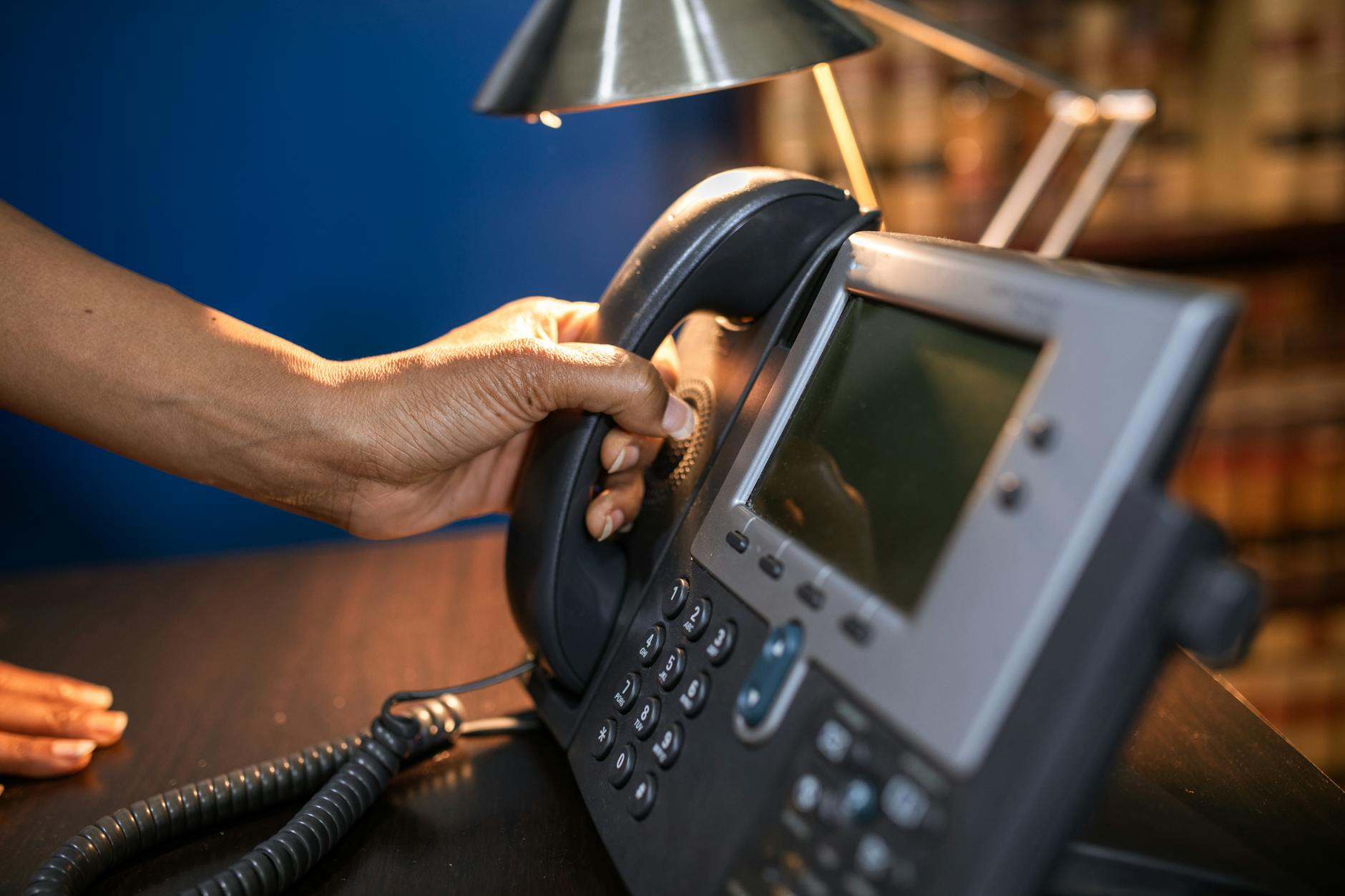
Photo RDNE Stock project · Pexels
And here is the part that hurts: 85% of callers who don’t get through don’t call back. They don’t wait. They open Google Maps and ring the next place on the list.
So a missed call is never just an ignored ring. It is an empty table, a deposit that never happens, a takeaway order that goes two doors down.
The real cost: €2,730 in one evening
Add it up for that bistro, Saturday 19 April, five hours of service.
- 91 missed calls (out of 287 inbound)
- €30.72 average spend per cover (source: Fiducial 2025)
- €2,730 potential revenue lost (in one evening)
The maths: 91 missed calls × 30% booking conversion × 3.2 average covers × €30.72 = €2,685.
Twenty-two evening services a month puts that at €60,060 in latent revenue. On an 8% net margin, it is €4,800 of profit walking out.
And none of that counts regulars, takeaway orders, allergy questions, or the calls that land when the room is closed.
What changes when nobody can get to the phone
Before: the phone rings during the rush, the team chooses the floor, the caller tries once and rings the competitor. No trace, no follow-up, no way of knowing it happened.
After: the call nobody could take triggers a WhatsApp message within seconds, with an SMS fallback if the number isn’t on WhatsApp. The guest answers in writing, between two metro stops, and the booking is written into your software while your team stays in the room.
Nobody on the floor had to stop. That is the whole point.
Case study: 4 Fridays, 1,217 calls recovered
80-cover bistro, République, Paris, April 2026
Before Heep: a generic answerphone in the evening, an overwhelmed team between 7pm and 10pm. The owner knew he was losing calls. He just could not say how many.
After four Fridays with Heep covering the overflow, the dashboard did the saying.
- 1,217 calls handled outside the team
- 408 confirmed bookings
- +11% covers served per Friday
Scaled to a full month, he puts the recovery at €9,800 in additional revenue, without changing a dish or hiring anyone. The Friday-by-Friday breakdown is in A night with Heep: 47 bookings saved on a Friday.
Calculate your losses in 5 minutes
No audit needed. Your phone provider has everything.
Pull your call records.
Orange, SFR, Bouygues, BT: all of them export a CSV of inbound calls and durations. Take the last 30 days.
Filter the calls under 8 seconds.
Under 8 seconds, nobody answered or the caller hung up first. That is your base.
Apply a 30% conversion rate.
A conservative assumption: 30% of those calls would have become bookings. Multiply by your average spend and your average party size.
Take off your gross margin.
Typically 65 to 70%. What is left is the figure worth showing your accountant.
For the booking side of the same leak, the no-show cost calculator walks through the method.
What changes with Heep
Heep catches the call nobody was free to take and carries the conversation on in writing, the way your best host would, night and day. The unanswered call triggers a WhatsApp message in seconds, SMS if the number isn’t on WhatsApp, and the guest replies without having to call back. The booking lands in Zenchef, SevenRooms or TheFork, in the right slot, with nobody keying it in twice.
You keep the settings. Nights only, rush hours only, or round the clock: you decide when Heep takes over and what it may confirm on its own. Anything outside its scope, a private hire or a complaint, comes back to the team with the whole thread attached. The dashboard shows the volume, the languages coming in and the hours that leak.
The full flow is laid out in How Heep works.
One thing for tonight. Ask whoever holds the floor at 8pm how many times the phone rang without an answer. Then pull the provider’s CSV on Monday and compare the two numbers. If they match, you have a team that knows its room. If they don’t, you now know what Saturday costs. Book a demo when you want to talk it through.
Frequently asked questions
How many calls is my restaurant actually missing?
Between 5pm and 8pm, the sector average is 32% of calls unanswered. Over 24 hours, including closed hours, that rate climbs to 60–70% of total inbound volume. Your phone provider records give you the exact figure.
Does Heep replace my front-of-house team?
No. Heep absorbs the peak and the night. Your team stays front-and-centre for the in-room experience, complex requests, and VIPs. Heep only handles the requests that would otherwise have been lost.
How long before results show?
Deployment takes a few days. First figures come in from the very first evening — typically 30 to 50 bookings recovered over the first weekend.
Does Heep integrate with my current booking software?
Yes. Zenchef, SevenRooms, TheFork Manager, Resy: the connection is native and two-way. No double entry, no migration.
What if I’m missing fewer calls than average?
It only pays from around 8 recovered calls a month (roughly €250 in additional revenue). Below that, Heep isn’t the right fit — the demo team will tell you straight.