Zenchef Review 2026: Strengths, Limits & Alternatives
Zenchef review 2026: an honest take on the strengths and limits of the French booking leader, with a side-by-side comparison vs TheFork Manager, SevenRooms and OpenTable.

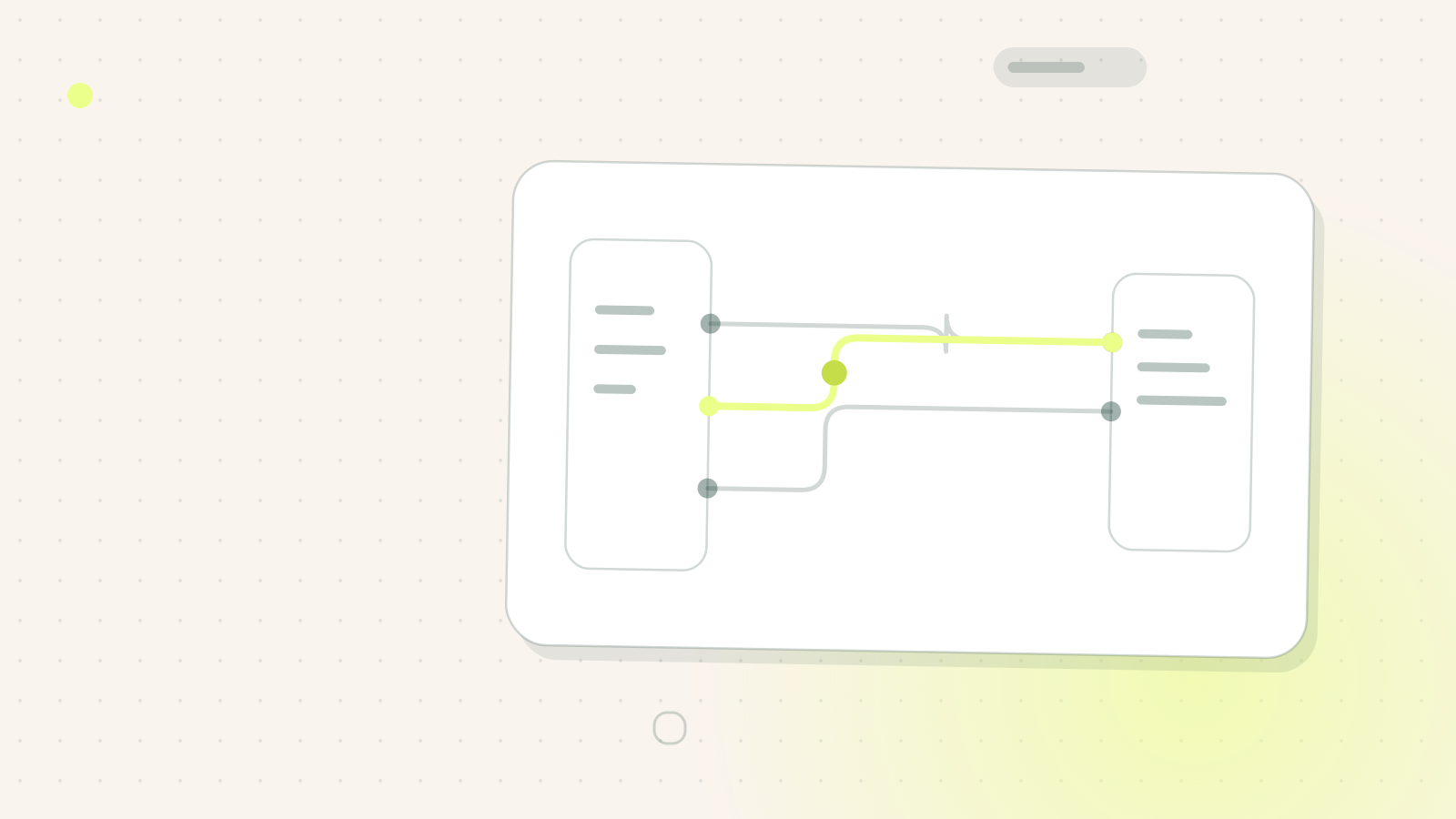
The question we get is almost never “is Zenchef any good?”. It is “if I move to Zenchef, do my Instagram and WhatsApp requests end up in it?”. Those two have different answers, and most comparisons answer the first while believing they answered the second.
A booking system does two distinct things: it holds the book, and it captures requests. Zenchef holds the book very well. It only captures what comes through its widget or Reserve with Google, which is a scope limit, not a quality defect.
What follows separates the two: the real strengths of Zenchef, the four limits to know before signing, and how it sits against TheFork Manager, SevenRooms, OpenTable and Resy.
7,000+ restaurants equipped across Europe, the majority in France. Zenchef is the most installed reservation system in independent French hospitality — but it’s not the right fit for every profile.
Zenchef in brief: who it’s for
Zenchef is an all-in-one platform for restaurant reservations, guest CRM and marketing automation. Founded in Paris in 2007, the company positioned itself as the European alternative to American solutions (OpenTable, SevenRooms) and to TheFork’s commission model.
Its core target: independent French restaurants, with a steady move upmarket toward groups and fine dining. The Zenchef bet: give you a no-commission direct booking widget in exchange for a monthly subscription.
- 2007 Founded in Paris (Zenchef, public data)
- ~€89 Indicative entry-level monthly price (basic plan) (Market estimate, varies per venue)
- 15+ European countries covered (Zenchef, 2025)
Practically, Zenchef replaces your reservation book, your customer Excel sheet, and automates part of post-visit marketing. For most independent French restaurants, it’s the de facto standard.
The 4 real strengths of Zenchef
The direct booking widget (no commission)
The Zenchef widget plugs into your website and into your Google Business Profile via “Reserve with Google.” Every booking lands directly, with no per-cover fee (unlike TheFork, which takes a commission). On 500 covers/month at €50 average ticket, the annual gap vs TheFork commission can reach €5,000 to €8,000.
Built-in no-show management
Card imprint at booking, partial or full prepayment, automatic 24h and 2h reminders. On a venue with an 8% no-show rate, switching these on properly typically brings it down to 2-3%. See our no-show cost calculator.
Native marketing automation
Post-visit email, guest birthday, win-back at D+90 if not returned. Plugged into the CRM, these scenarios fire automatically — and they work: restaurants that activate three or four lifecycle scenarios see on average +15% returns at 12 months.
The local ecosystem and integrations
Connectors to Google, Instagram, Facebook, Zenchef Pay (integrated payment), POS systems (Lightspeed, Tiller, JDC). French-language support, included training, native GDPR compliance. The least glamorous advantage — and arguably the most decisive for a French operator who has no time to wrangle English-only support.
The 4 limits to know before signing
No solution is perfect. These four are not design defects: they are lines to get spelled out in the quote before you sign.
- No native multi-channel inbound handling. Zenchef captures your widget bookings and Google bookings. It does not capture Instagram DMs, WhatsApp messages, group emails or missed phone calls. On an average restaurant, those channels represent 30 to 50% of inbound requests.
- Onboarding can be heavy on multi-site setups. For a group of 5+ venues, full deployment typically takes 4 to 6 weeks with your account manager. Reasonable, but a long way from the marketing’s “plug-and-play” framing.
- CRM is less rich than SevenRooms at the premium tier. For fine dining venues with established regulars (complex individual notes, fine preferences, lifetime-value tracking), SevenRooms remains stronger. Zenchef covers the essentials — it doesn’t go as deep on behavioural granularity.
- Pricing climbs fast with options. The ~€89/month entry plan is misleading: card imprint, prepayment, advanced modules and multi-site bill on top. A complete setup on an active venue regularly exceeds €200-300/month.
See how Heep captures these requests for you
Zenchef vs TheFork Manager, SevenRooms, OpenTable, Resy
Four serious alternatives, four different positionings. The table below summarises what actually differs.
| Dimension | Zenchef | TheFork Manager | SevenRooms | OpenTable / Resy |
|---|---|---|---|---|
| Origin | France (2007) | France (2007) | USA (2011, acquired by DoorDash 2023) | USA |
| Core target | Independents & FR groups | Restaurants chasing volume | Fine dining & premium groups | US urban restaurants |
| Business model | Subscription, no commission | Subscription + per-cover commission | Premium subscription | Subscription + booking fees |
| Indicative pricing | ~€89-300/month | Variable (commission + sub) | €300-800+/month | €200-500+/month |
| Main strength | FR all-in-one, no commission | Marketplace traffic | Deepest guest CRM | US network, international visibility |
| Main limit | No native multi-channel inbound | Marketplace dependency | Cost & onboarding complexity | Weak fit for the FR market |
| Recommended if… | FR restaurant, 40-200 covers | You’re launching and need flow | Ticket €60+, loyal clientele | Strong English-speaking tourist base |
SevenRooms deep-dive: our complete analysis of the 7 underused SevenRooms features.
The blind spot every booking system shares
Zenchef, TheFork Manager, SevenRooms, OpenTable, Resy: they all excel at the same thing, and they all fail at the same thing.
What every system captures
- Direct widget bookings
- “Reserve with Google” bookings
- Manual phone entries
- Walk-ins logged by staff
What none of them capture
- Instagram DM ignored at 7:45pm
- WhatsApp message left unread on Sunday evening
- Group email buried under 40 others
- Missed call during the dinner rush
On an 80-cover restaurant receiving 60 inbound requests a day across all channels, an estimated 20 to 30% of those requests never reach Zenchef. Not because Zenchef is bad — because they arrive on channels no booking system monitors.
Observed case — 90-cover Paris brasserie
- Setup: Zenchef as the booking engine, Heep as the multi-channel inbound AI layer.
- Result: direct bookings up over 90 days, most of them from channels the booking system had no visibility on (Instagram DMs, WhatsApp, missed calls).
- Effect on Zenchef data: every AI conversation updates the Zenchef guest profile with source, occasion and preferences. Marketing automation gets sharper.
Technical integration detail: how to sync a multi-channel AI with Zenchef.
Verdict: when is Zenchef the right pick?
- Independent French restaurant, 40-200 covers. Zenchef is probably the best price-to-value ratio on the market. Direct widget, no-show management and CRM cover 80% of your needs.
- French group of 2-10 venues. Zenchef holds up well. Plan 4-6 weeks of onboarding and a realistic budget of €200-400/month per site.
- Fine dining with €90+ ticket. SevenRooms is the better fit when CRM granularity is critical. Zenchef can still work if the FR ecosystem matters more to you than CRM depth.
- Restaurant chasing traffic. TheFork is more relevant than Zenchef. But beware of running both: paying TheFork commissions on guests who would have booked direct via Zenchef is an avoidable leak.
- Restaurant with strong English-speaking clientele (central Paris, French Riviera). OpenTable can complement — never replace — Zenchef in this context.
Three things to get in writing before you sign: the full quote with modules (card imprint, prepayment, multi-site), the committed onboarding timeline beyond three venues, and the list of inbound channels the tool actually reads. The third is the one everyone forgets, and it decides what never reaches the book.
You’re on Zenchef and wondering how many requests are slipping past it? Calculate the recoverable revenue
Frequently asked questions
Is Zenchef really commission-free?
On bookings flowing through your Zenchef widget or Reserve with Google: yes — you pay the subscription, not per booking. Zenchef Pay and certain modules carry their own fees.
Can you combine Zenchef and TheFork?
Yes, and it’s common: Zenchef for core management, TheFork for marketplace visibility. Watch out for double-counting and for paying commissions on guests you would have captured directly.
What does Zenchef actually cost in practice?
Entry plan around €89/month. With card imprint, advanced modules and multi-site, expect €200-300/month for an active venue. Always ask for a personalised quote.
Does Zenchef replace a POS?
No. Zenchef focuses on reservations, CRM and marketing. You keep your POS (Lightspeed, Tiller…) for the till. Both can be integrated.
Does Heep replace Zenchef?
No. Heep is a multi-channel inbound AI layer that pushes bookings into your existing Zenchef. The two are complementary — not competitors.