Restaurant software 2026: the stack beyond the till (the 30% margin you're missing)
Beyond the till, four tools quietly shape 30% of your margin: bookings, messaging, no-shows, loyalty. The 2026 stack, decoded brick by brick.

“Do I need to change my till?” The question always comes first, and it lands on the one brick that decides nothing.
A till records what was sold; it never decides what sells. Not the request that lands at 11 pm on WhatsApp, not the call nobody could take during the rush, not the booked table that will not show. All of it happens before the payment.
30% of an independent restaurant's margin depends on software that isn't the till.
Why your POS isn't enough in 2026
Search “restaurant software” on Google: of the top 15 results, 13 talk about tills. Yet across 179,000 venues in France, the till decides neither cover counts nor return rate.
It cashes up. That is already a lot, and it is not one extra cover.
Covers come from elsewhere: the booking widget, the Instagram DM, the phone call, the confirmation SMS, the Google review left after coffee. Four tools, all missing from mainstream comparisons.
- 179,000 restaurants in France (INSEE 2024)
- 88% independent (vs 12% chains)
- +52% revenue uplift (digitalised venues (France Num))
The four tools that really shape your margin
Beyond the POS, four bricks decide whether a cover sits at your table. Each plugs a specific margin leak, and each has its limit.
- Bookings. Convert intent into seated covers. Without them, 47% of French restaurants still refuse online bookings outright.
- Inbound communication. Recovers missed calls by WhatsApp, then SMS, and captures DMs, emails and WhatsApp messages. 30% of restaurant calls never get picked up.
- Anti no-show. Card hold, reminders, confirmations. A no-show costs an average of 8% of weekly revenue.
- Post-visit retention. Google reviews, follow-ups, NPS. Bringing a guest back costs five times less than acquiring one.
How much is your incomplete stack costing you each month? Estimate the lost revenue
Brick 1, bookings: 47% still go without
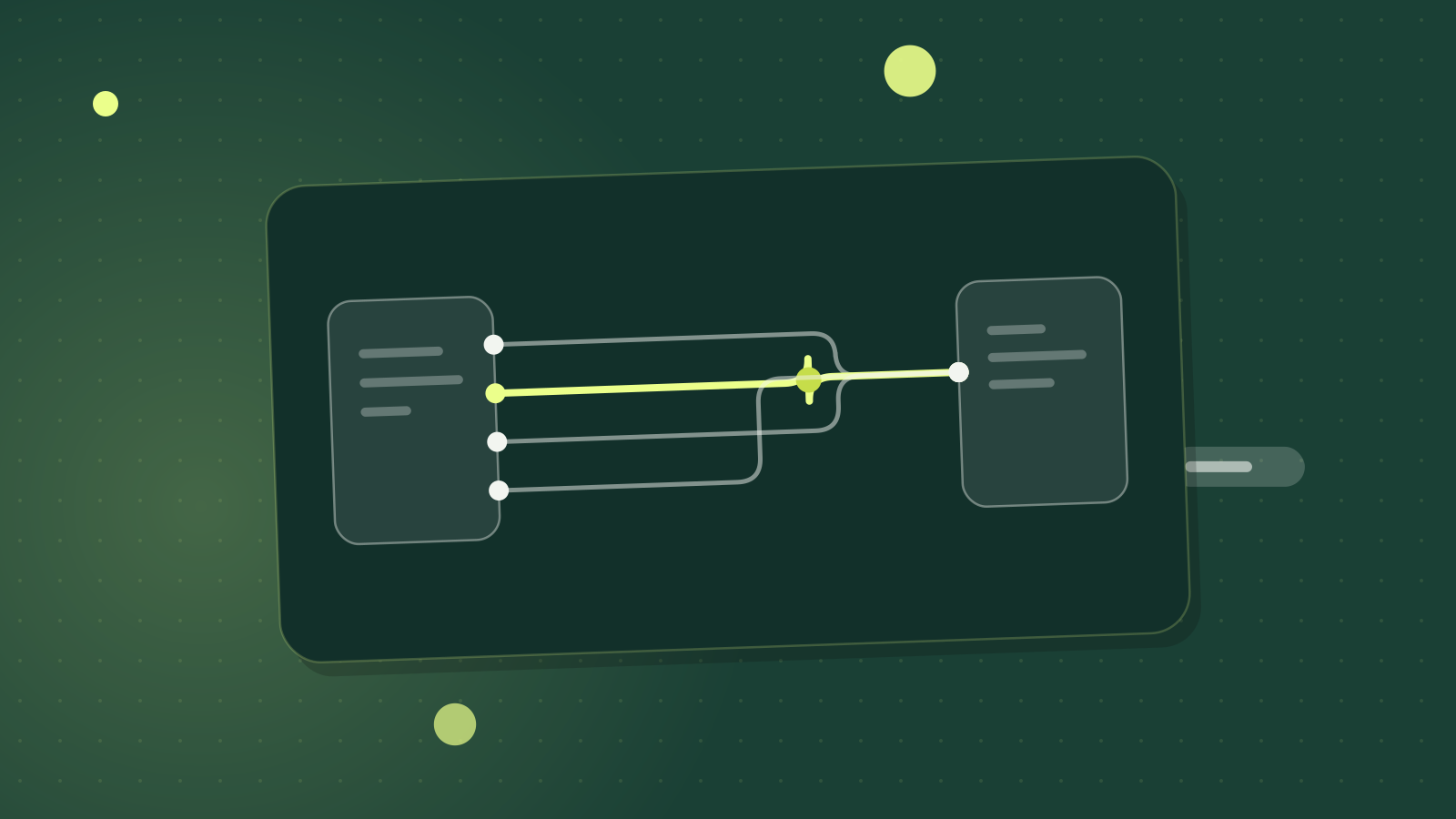
One distinction decides everything here: reading availability is not writing the booking. The first sends back a link, and the table does not exist until the guest clicks; the second writes it into the book, on the right service, source tracked.
So direct bookings are not a luxury. They are a commission-free channel that captures the guest the night your kitchen closes. Without it, you let TheFork take 10 to 15% off every cover.
Moving to a widget plus conversational AI is measurable: 62% of out-of-hours requests captured, a unified guest profile, TheFork commission cut by three.
Tools on the market: Zenchef, SevenRooms, TheFork Manager. Heep plugs into them in one click and captures the bookings that never reach your interface (DMs, WhatsApp, missed calls).
Brick 2, inbound communication: the silent leak
The invisible brick: nobody invoices it, because nobody measures it.
An average restaurant gets 300 to 800 messages a month across five channels: phone, Instagram, WhatsApp, email, website form. No POS, no PMS brings them together.
The only question that matters fits on one line: do those messages leave with a booking written into the book, or with a link to click?
Noto Paris (Moma Group): 1,600 monthly bookings captured by Heep
Before Heep: 2,500 missed calls a month, 1,300 unanswered DMs, 60% of inbound flow ignored. After eight weeks: unified flow, replies by message in 30 seconds 24/7, every missed call recovered by WhatsApp then SMS.
- 1,600 bookings/month via Heep
- −92% missed calls
- 30 s average reply time
A methodology note: those 1,600 bookings are counted in the book, not estimated. The revenue attached to them stays an average-spend estimate until the real ticket comes back from the till.
See Heep run on your inbound flow
Brick 3, anti no-show: cut the rate by five without alienating guests
No-shows cost an average 8% of weekly revenue: for a 50-cover service, that is four empty tables every week. Three levers work, and none lives in the till:
Card hold
Better accepted than people fear when it is asked for inside the conversation, and it is the sharpest lever against no-shows, provided your booking system offers it: it carries the link, not Heep.
D-1 reminders on the right channel
WhatsApp opens at 98%, SMS at 95%, email at 22%. Pick the guest's channel, not yours.
D-day confirmation
A message two hours before service cuts no-shows by 60%, provided you ask for an explicit reply.
Go deeper: card holds without alienating your guests.
Brick 4, post-visit retention: the forgotten margin
Acquiring a new guest costs five times more than bringing an old one back. Yet 9 out of 10 restaurants never follow up. Three actions are enough:
- Targeted Google review request. Sent two hours after departure on the guest's preferred channel. The rating climbs at the pace of new reviews, and a better-rated listing gets chosen more often.
- Seasonal re-engagement, not spam. WhatsApp opens 12× more than email, without damaging the brand.
- Enriched guest profile. Allergies, preferences, birthdays: the foundation of personalised service that justifies the average spend.
How to build your stack in five steps
Audit your current POS
What it does, what it does not. Most stop at cashing up.
Measure the leaks
Missed calls, unread DMs, no-shows. Three numbers, 30 minutes.
Pick a booking system
Zenchef, SevenRooms, TheFork: each has its territory. See our in-depth comparison of Zenchef, SevenRooms and TheFork Manager.
Plug in inbound communication
Missed calls go back out as WhatsApp then SMS; DMs, WhatsApp and email land in one thread per guest.
Switch on anti no-show and follow-ups
Card hold, reminders, review requests. Worth it from week one.
That leaves three checks, before you sign. The tier of your booking contract: API access sometimes depends on region and plan, and a widget alone writes nothing into the book. The setting that creates duplicates: on Zenchef, Zen Call has to be switched off, or the same request lands twice. The way revenue is calculated: unless you run Zenchef × Lightspeed, the figure on screen is an average-spend estimate, not a payment read from your till.
Three questions for your vendor, before the first connection.
Frequently asked questions
Do I need to replace my till to get a complete stack?
No. Your POS keeps cashing up. The stack builds around it, in parallel. The four bricks (bookings, communication, anti no-show, retention) plug in alongside, without touching the till.
How much does a complete stack cost monthly?
Between £130 and £340 a month for an independent: £45-80 POS, £50-100 bookings, £45-130 AI communication, £0-45 retention. Compare with the 8% of revenue lost to no-shows alone.
Does Heep replace my till?
No. Heep handles everything conversational and inbound, missed calls (recovered by WhatsApp then SMS), WhatsApp, Instagram, email, and syncs with your booking system. The till cashes up; Heep converts.
What if I already have Zenchef or SevenRooms?
Heep connects in one click. It picks up the bookings that never reach your interface (missed calls, DMs, out-of-hours) and pushes them into Zenchef or SevenRooms automatically.
Can I start with just one brick?
Yes. Inbound communication delivers the fastest ROI: it's the brick that bleeds the most today without anyone noticing.